
From Disconnection to Opportunity: California Wants to Partner with You on Youth Engagement
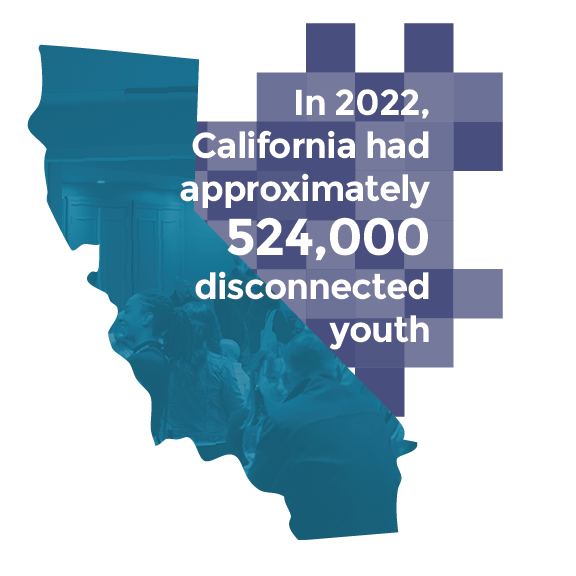
A report titled “An Update on Teen & Young Adult Disconnection in California” regarding youth disconnection highlights a pressing issue that resonates not only within the state but also across the nation. Youth disconnection, defined as individuals aged 16-24 who are neither in school nor employed, remains a significant challenge, with approximately 524,000 young people affected in California alone. This issue is not unique to California; it reflects broader trends seen in various states, emphasizing the need for comprehensive strategies to address the root causes of disconnection.
In 2022, California had approximately 523,983 disconnected youth, representing 11.2% of the 16-24 age group, a decrease from the 12.5% rate in 2021 but still higher than the pre-pandemic rate of 10.3% in 2019.
The report underscores the importance of understanding demographic, racial, ethnic, and geographic disparities that contribute to youth disconnection. For instance, Black and Hispanic/Latino youth face higher disconnection rates, highlighting the need for targeted interventions that consider the unique challenges faced by these communities. This is a call-to-action for policymakers and practitioners nationwide to develop responsive and scaffolding programs that address these disparities.
Geographic variation within California itself is significant, with disconnection rates ranging from 7.1% in San Francisco to 17.2% in Kern County. This variation suggests that place-based strategies are essential, not only in California but also in other states where regional disparities may exist. Collaborative efforts among local governments, schools, and community organizations are crucial to effectively address the specific needs of disconnected youth in different regions.
California has implemented various programs to tackle youth disconnection, such as the California Opportunity Youth Apprenticeship (COYA) grants and the Local Control Funding Formula (LCFF). These resources lift up local control and valuable lessons for other states looking to re-engage disconnected youth through education, training, and employment opportunities.
The report recommends:
-
- Expanding access to targeted education and job training programs
- Enhancing support services
- Promoting early intervention
- Fostering cross-sector collaboration
These strategies are not only applicable to California, but can also serve as a model for other states aiming to reduce youth disconnection and support their young populations.

Come join us in San Diego, California on November 3-5 for the 13th annual RAPSA Forum. At this conference, you will have the opportunity to be with your people, engage multiple states Departments of Education/SEA's, teachers, educators, researchers and workforce development partners who are on a mission to combat youth and student disconnection, support At-Promise students, and discuss innovative solutions for a brighter tomorrow!