
"Behind every data point in this report is a young person whose future can change with the right opportunity. Partnerships between community organizations, schools, and workforce boards are the key to unlocking those opportunities at scale.”
Cristina Rubino, Ph.D.
RAPSA is proud to amplify the latest research from our partners at New Ways to Work: “Youth Workforce Development in California,” prepared by Cristina Rubino, Ph.D., with contributions from New Ways’ President & Executive Director, Robert Sainz. In support of the collaborative effort between RAPSA and our esteemed partners, New Ways to Work and the California Opportunity Youth Network (COYN), we are sharing research and information to better serve the At-Promise Youth and Opportunity Youth communities, ensuring that educators and workforce providers have access to the resources and opportunities they need to support youth to thrive.
Notably, the report underscores the success of innovative local initiatives, such as those in Los Angeles and Fresno County, which have demonstrated exemplary practices in reducing inequality and improving long-term outcomes for youth. As we continue to work together, let us draw inspiration from these efforts and strive to expand our impact, ensuring that every young person has the opportunity to become an architect of their own future.
Summary of Youth Workforce Development in California
Overview
The "Youth Workforce Development in California" report provides a comprehensive analysis of efforts in California to equip young individuals with essential skills and create pathways for personal and professional growth. The report is prepared by Cristina Rubino, Ph.D., and Robert Sainz.
Executive Summary
The report emphasizes the importance of the Youth Workforce Development System in California, highlighting its role in supporting students to reach their full potential and fostering economic and social well-being. It aims to stimulate partnerships with community-based organizations (CBOs) to create equitable access to education and career pathways.
Education and Employment Data
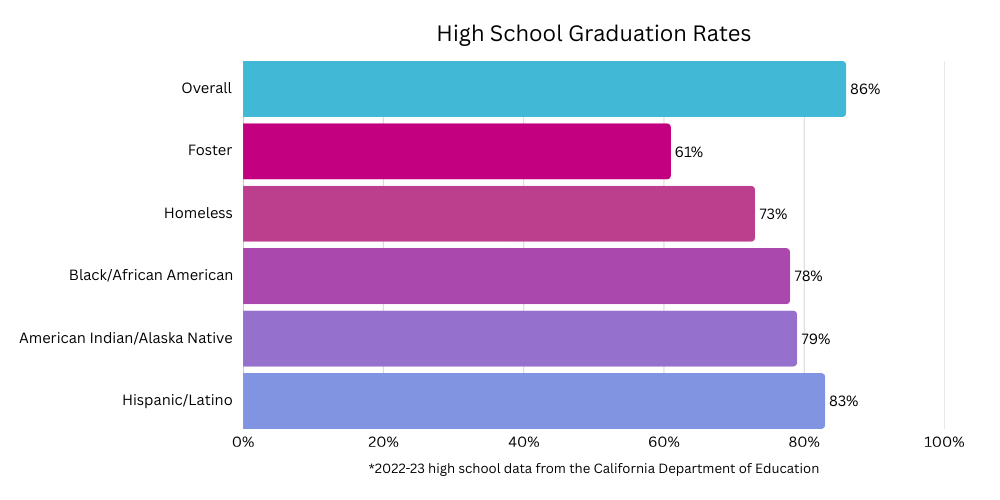
The report draws on 2022-2023 data, revealing disparities in education and employment among California's youth, particularly for underserved communities. High school graduation rates are lower among Foster, Homeless, Black/African American, and American Indian/Alaska Native students. Similarly, school enrollment rates for 19-24 year-olds show significant racial and ethnic disparities.
Understanding the Needs of Opportunity Youth
Opportunity Youth, aged 16-24, face complex barriers such as disconnection from education and employment, often due to experiences with foster care, the justice system, or homelessness. The report stresses the need for resources to unlock their potential and enable meaningful workforce contributions.
California's Youth Workforce Development System
The report outlines the structure and strategic direction of California's public workforce development system, which is part of the federal Workforce Innovation and Opportunity Act (WIOA). The California Workforce Development Board (CWDB) plays a crucial role in implementing initiatives to improve upward mobility and make quality employment accessible.
Strategic Initiatives and Funding
California is committed to creating a "High Road" economy, focusing on equity, high-quality employment opportunities, and environmental responsibility. The CWDB's initiatives in 2022 served nearly 36,000 youth, exceeding targets in employment, earnings, and skill gains.

Innovative Practices and Local Workforce Development Boards (LWDBs)
The report highlights innovative practices by LWDBs, such as building community partnerships and creating comprehensive support networks. Notably, the youth-serving systems in Los Angeles and Fresno County are commended for their exemplary work.
Looking Forward: Best Practices and Recommendations
The report suggests several next steps, including generating momentum around a unified effort to create local communities of service providers focused on Opportunity Youth. It also emphasizes the need for career-connected training and education, sector-specific training, and a youth-centered approach to workforce development.
Recommendations from the report suggests:
-
- Building stronger local networks of service providers focused on Opportunity Youth.
- Expanding career-connected education, apprenticeships, and “earn and learn” opportunities.
- Scaling effective sector-specific training in high-demand industries.
- Adopting a youth-centered approach that empowers young people to shape their own career pathways and access comprehensive wrap-around supports.
For further discussion on this report, contact:
Dr. Ari Malka
Senior Researcher at New Ways to Work
(malka.ari@gmail.com)
Khi Jackson
Managing Director at Reaching At Promise Students Association
(khi@rapsa.org)
Through this partnership, RAPSA and New Ways to Work are committed to ensuring that educators, workforce providers, and policymakers have the insights and tools needed to help all young people, especially those facing the highest barriers, thrive in California’s economy.
Join your professional community of dedicated leaders November 3-5, 2025 in sunny San Diego California for the 13th annual RAPSA Forum to learn more about the data and how we can advance career education to support social and economic mobility for youth.
